ReUp Our Ocean Project

ReUp Our Ocean ProjectReUp Our Ocean ProjectReUp Our Ocean Project

ReUp Our Ocean Project

ReUp Our Ocean ProjectReUp Our Ocean ProjectReUp Our Ocean Project
  • Home
  • About
  • Education
  • Shop
  • Tracker
  • More
    • Home
    • About
    • Education
    • Shop
    • Tracker
  • Sign In
  • Create Account

  • Orders
  • My Account
  • Signed in as:

  • filler@godaddy.com


  • Orders
  • My Account
  • Sign out

Signed in as:

filler@godaddy.com

  • Home
  • About
  • Education
  • Shop
  • Tracker

Account

  • Orders
  • My Account
  • Sign out

  • Sign In
  • Orders
  • My Account

Where Waste Becomes a Learning Opportunity

ReUpOurOcean explores what happens

when discarded plastic and surf waste are given another purpose. Through collection, experimentation, education, and community partnerships, we explore how recovered materials can become useful products and, eventually, larger community solutions.

The Problem: Why Does Plastic Waste Matter?

Forever Plastics

ReUp: A Different Path Forward

Forever Plastics

Plastic doesn't simply disappear.

Plastic is designed to be durable. Once discarded, it can remain in the environment for long periods and gradually break into smaller pieces, including microplastics. This creates a waste stream that can continue circulating through our environment long after the original product is gone. 

The challenge:
Ho

Plastic doesn't simply disappear.

Plastic is designed to be durable. Once discarded, it can remain in the environment for long periods and gradually break into smaller pieces, including microplastics. This creates a waste stream that can continue circulating through our environment long after the original product is gone. 

The challenge:
How do we keep existing plastic in use instead of continually producing and discarding more?

Marine Harm

ReUp: A Different Path Forward

Forever Plastics

Everyday plastic can become ocean debris.

Fishing nets and line, plastic bags, food wrappers and packaging, bottles, bottle caps, toys, and other everyday plastics can make their way into waterways and coastal environments. Once there, larger debris can entangle or be swallowed by marine animals, while larger plastics can gradually fragment into smaller pieces and microplastics.

ReUp: A Different Path Forward

ReUp: A Different Path Forward

ReUp: A Different Path Forward

Keeping recovered plastic in circulation.

ReUp Our Ocean is exploring what becomes possible when discarded plastic is treated as a resource rather than a one-time-use material. Our work starts with small-scale products and material experiments, while building toward larger applications that could replace virgin plastic in everyday communit

Keeping recovered plastic in circulation.

ReUp Our Ocean is exploring what becomes possible when discarded plastic is treated as a resource rather than a one-time-use material. Our work starts with small-scale products and material experiments, while building toward larger applications that could replace virgin plastic in everyday community products.

The long-term vision is to develop durable recycled-plastic materials for things people actually use, from panels and furniture to trash receptacles, school resources, and other community infrastructure.

The opportunity:
What if the plastic removed from our neighborhoods could help build something those same neighborhoods need?

What We Collect

#2 HDPE – High Density Polyethylene

#2 HDPE – High Density Polyethylene

#2 HDPE – High Density Polyethylene

  • Milk bottles 
  • Detergent and Fabric Softener Containers
  • Bottle Caps
  • Body wash, Shampoo, and Conditioner Bottles
  • Cleaner and Bleach Bottle

#4 LDPE – Low Density Polyethylene

#2 HDPE – High Density Polyethylene

#2 HDPE – High Density Polyethylene

  • Films and Wraps
  • Bubble Wrap
  • Grocery Bags
  • Trash Bags
  • Bread Bags

#5 PP – Polypropylene

#5 PP – Polypropylene

#5 PP – Polypropylene

  • Straws
  • To-Go Food Containers
  • Yogurt and Butter Tubs
  • Bottle Caps
  • Pill Bottles
  • Most Microwave Safe Containers

Other Materials

#5 PP – Polypropylene

#5 PP – Polypropylene

  • Wood/Wooden Pallets
  • Plastic Pallets
  • Fishing Nets/Nylon Strips

*Contact us for non-listed material/equipment donations.


⚠️ Please Donate CLEAN Materials⚠️

All plastic donations should be reasonably clean and free of food, liquids, dirt, and other contaminants.

Cleaning and preparing donated materials is already part of the ReUp process, so materials do not need to be perfectly clean when donated. However, heavily contaminated materials can create safety and processing challenges.

Please use this simple rule:

If you wouldn't want to touch it, please don't donate it to us.

Collect → Sort → Prepare → Process → Create → Reuse

Collect → Sort → Prepare → Process → Create → Reuse

Collect → Sort → Prepare → Process → Create → Reuse

Collect → Sort → Prepare → Process → Create → Reuse

Collect → Sort → Prepare → Process → Create → Reuse

Collect → Sort → Prepare → Process → Create → Reuse

Learning Through Action

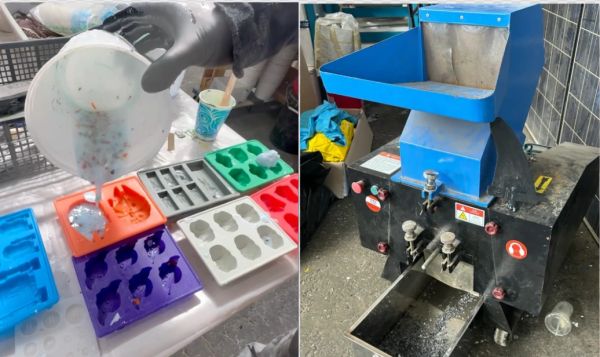
At ReUp, education is rooted in hands-on experience. Our field trips, group visits, workshops, and community activations introduce participants to plastic pollution, material recovery, and the circular economy through real-world examples.

Visitors can explore the journey of discarded materials from collection and sorting to processing and reuse, while discovering how creativity, innovation, and responsible material choices can help reduce waste and protect our ocean.
See Circularity in Action

See how discarded materials can become new possibilities.

Depending on the visit or event, experiences may include:

  • Material identification and sorting
  • Plastic shredding demonstrations
  • Upcycling and material transformation demonstrations
  • Hands-on sustainability activities
  • Recovered material and product showcases
  • Discussions about plastic pollution and the circular economy

Field Trips & Group Experiences

Sustainability education designed for schools, organizations, and communities.

Experiences can be adapted for:

  • K–12 school and youth groups
  • College and university groups
  • Educators and environmental programs
  • Community organizations
  • Corporate and nonprofit groups
  • Special events and community activations

Visits can combine guided learning, demonstrations, hands-on activities, and conversations around waste, sustainability, and environmental innovation.

Ready to Plan Your Visit?

School field trips, classrooms, youth organizations, college groups, and other large group visits are booked through AltaSea at the Port of Los Angeles. Simply complete the AltaSea Field Trip Request Form using the button below, and their education team will coordinate your visit.


AltaSea Field Trip Request Form


Interested in a Individual Visit?

If you're looking to schedule an individual tour, or would like to discuss a partnership or collaboration, please submit an inquiry through the Contact section on our Home page. We'll be happy to connect with you directly.

Contact Us
  • About

Reup Our Ocean Project

Copyright © 2026 Reup Our Ocean Project - All Rights Reserved.

Powered by

This website uses cookies.

We use cookies to analyze website traffic and optimize your website experience. By accepting our use of cookies, your data will be aggregated with all other user data.

Accept